
Top Benefits of a Static IP for Home Internet
See the top benefits of a static IP for home internet, from reliable remote access to simpler smart-home setup, plus when a dynamic address is enough too.
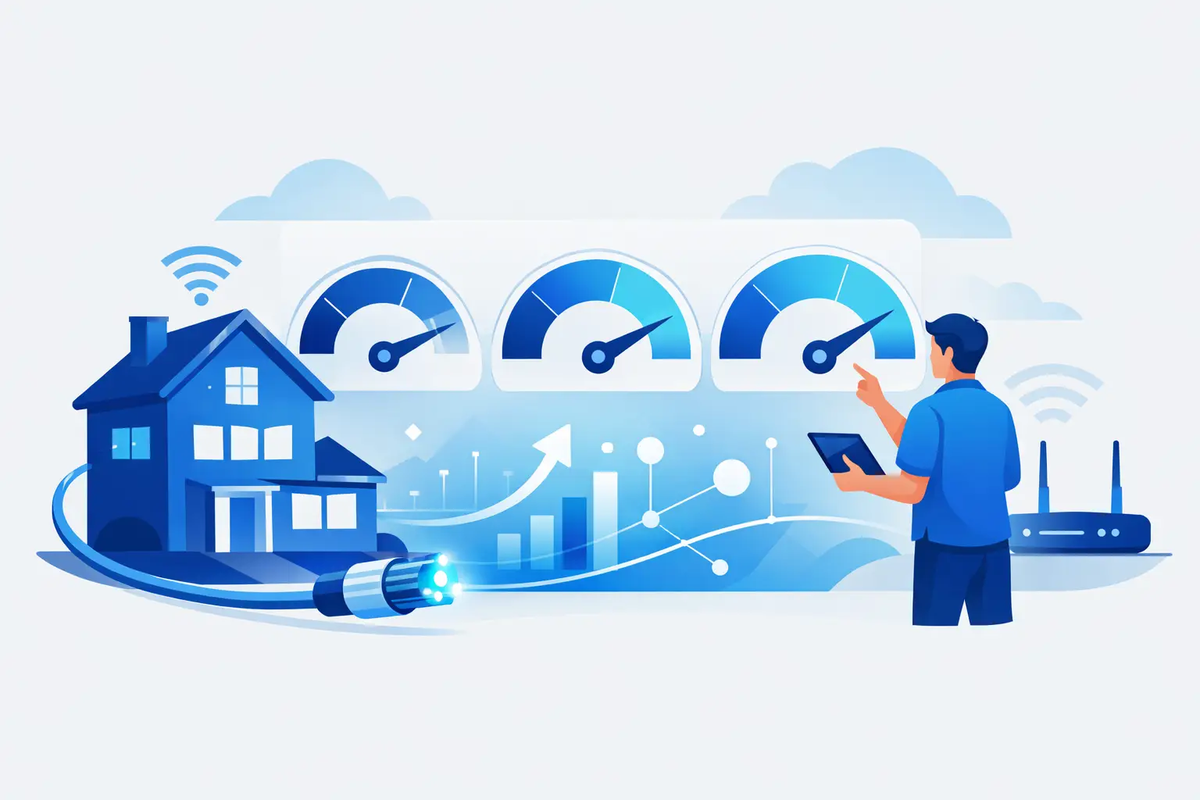
One person is on a video call, another is streaming in 4K, the kids are gaming, and someone in the kitchen has just asked the smart speaker for the weather. That is usually the moment people start wondering how to choose home fibre speed properly. The right answer is not always the fastest package on the page. It is the speed that matches how your household actually uses the internet, at the times it matters most.
Too many people buy on headline numbers alone and end up with either wasted capacity or daily frustration. Fibre speed should be chosen the same way you would choose any essential utility - based on demand, reliability and the way your home is set up. If you understand those three things, the decision becomes much easier.
The first thing to know is that broadband speed is not a status symbol. A larger number is only better if your household can genuinely use it. A couple who mainly browse, stream a film in the evening and make the occasional video call does not need the same connection as a busy family with several connected devices running all day.
It also helps to separate internet speed from Wi-Fi quality. People often blame the fibre line when the real issue is poor wireless coverage, an ageing router or a bad device location. If the signal is weak in the upstairs office or the back bedroom, upgrading from 300 Mbps to 1 Gbps may change very little. Good home networking matters just as much as the line itself.
That is why speed should be judged in context. Ask what your household does online, how many people are active at the same time, and whether the problem you are trying to solve is capacity, coverage or consistency.
Most homes fall into a few broad usage patterns. Light users mostly browse the web, use social media, watch HD streaming services and handle email or online banking. Moderate users add regular video calls, cloud backups, smart home devices and more than one stream at a time. Heavy users have multiple people online simultaneously, often mixing 4K streaming, gaming, large downloads, remote work and connected security devices.
If your home is in the light to moderate category, a modest fibre package is often more than enough. Modern fibre connections at entry level can already handle everyday use very comfortably. If your home is busy from morning to night, with several users working and streaming at once, moving up to a higher tier makes far more sense.
The key is concurrency. A single 4K stream is manageable on many connections. Three 4K streams, a video meeting, an Xbox update and a cloud photo sync all happening at once is a different story. Peak-time behaviour matters more than occasional use.
Streaming is fairly predictable. HD video needs much less than people assume, while 4K needs more headroom but still not enormous bandwidth on its own. The challenge comes when several streams run together.
Gaming is a little misunderstood. Online gaming does not usually require massive download speed during play, but it does depend heavily on low latency and stable performance. Large game downloads and updates, however, benefit directly from faster fibre. If you want a new title installed quickly rather than overnight, extra speed is useful.
Home working adds another layer. Video meetings, VPN access, cloud platforms and file transfers all rely on a stable connection. If two adults work from home and both spend much of the day in meetings, it is sensible to choose a plan with comfortable headroom rather than the bare minimum.
Many households only look at download speed because that is what gets advertised most prominently. For real-world performance, upload speed can be just as important. It affects video calls, sending large files, cloud backups, online collaboration and security camera uploads.
This matters especially for professionals and small businesses running from home. If you regularly send design files, synchronise cloud storage or host frequent video calls, a stronger upload speed can make the connection feel much more capable. Fibre usually performs better here than older broadband technologies, but the package still needs to fit the workload.
A household with mostly passive use can focus more on download capacity. A household that creates, shares or uploads a lot should pay closer attention to both directions.
A larger household does not automatically need the fastest plan, but more people usually means more simultaneous demand. The rhythm of the home matters too. Some households are quiet during the day and busy only in the evening. Others are active across the full day, especially where adults work from home and children use connected devices for school or entertainment.
If usage is spread out, a mid-range fibre speed may be perfect. If everyone is online at the same time, especially in the evening, a higher tier will help maintain performance without arguments about who is using all the bandwidth.
Detached houses and larger flats can also reveal a second issue - Wi-Fi reach. If the router is tucked away in a cupboard or one corner of the property, weak coverage may look like slow broadband. In those cases, better placement, mesh Wi-Fi or upgraded hardware can improve the experience more than buying a faster line.
There are clear situations where upgrading is sensible. One is a household with several high-demand users active at the same time. Another is frequent large downloads, whether that is games, operating system updates or media files. A third is heavy cloud use, especially for work.
Future-proofing can also be reasonable, but only up to a point. If your needs are growing - more smart devices, more remote work, better quality streaming - choosing a package with room to grow avoids another upgrade in six months. That said, paying for top-tier speed today because it might be useful one day is not always money well spent.
The better question is not, "What is the fastest available?" It is, "What level gives this home enough headroom to stay fast when life gets busy?"
For smaller households with one or two active users, entry-level or mid-range fibre is often the sweet spot. It covers streaming, browsing, shopping, calls and occasional home working without strain.
For families with multiple users, mid-range to higher speeds are usually a better fit. They give enough room for parallel activity and reduce the chance that one heavy user affects everyone else.
For professionals working from home, especially those dealing with cloud tools, large files or regular video meetings, consistency matters as much as raw speed. This is where a quality fibre provider, good routing and reliable local support make a real difference. A service that is backed by in-house expertise and clear technical accountability is worth more than a flashy headline figure.
In Luxembourg, where many households combine international work, digital services and multilingual communication, that balance between speed and reliability is especially important. A connection should support the way people actually live and work, not just pass a speed test.
Even excellent fibre can be held back by weak hardware. Older routers may struggle with newer Wi-Fi standards, busy households and device-heavy environments. Placement matters too. A router hidden behind a television or placed in a utility cupboard will never perform at its best.
If you are choosing a faster package, make sure your router and home setup can benefit from it. There is little point paying for gigabit-class service if your wireless network tops out much lower in the rooms where you actually use it. In some homes, improved Wi-Fi equipment is the difference between average and excellent performance.
It is also worth checking the devices themselves. An old laptop or smart TV may not support the latest wireless standards, which means the broadband package is not the limiting factor.
Start by observing your busiest hour, not your quietest one. Count how many people are online, what they are doing, and whether anyone regularly complains about buffering, lag or slow downloads. Then ask whether the issue happens everywhere in the home or only in certain rooms. That tells you whether you need more bandwidth, better Wi-Fi, or both.
If your household mainly browses, streams and makes occasional calls, choose a sensible fibre tier and invest in good wireless coverage. If you have multiple heavy users, remote workers or constant connected activity, move up a tier so you have headroom. If you handle frequent uploads or business tasks from home, pay close attention to upload performance and service reliability, not just download numbers.
The best broadband choice is rarely about chasing the biggest figure. It is about building a connection that feels fast every day, for everyone using it, without paying for capacity your household will never touch.
A good fibre service should quietly keep up with your life. If you choose based on real usage, reliable hardware and honest headroom, you will feel the difference where it counts - in the moments when everyone expects the internet to simply work.
See the top benefits of a static IP for home internet, from reliable remote access to simpler smart-home setup, plus when a dynamic address is enough too.
Super fast fibre broadband gives homes and businesses the speed, stability and low latency needed for streaming, work, gaming and growth.
Shared hosting vs dedicated server: compare cost, speed, security and control to choose the right hosting setup for your site or business.

